

The Guide to Advanced Process Control (APC) for Optimizing Industrial Processes
Accomplish ultimate optimized plant performance with Advanced Process Control

Advanced Process Control (APC) is a highly cost effective way to optimize your plant without changing its hardware. An APC application improves the plant while optimizing both production and energy consumption in a sustainable way. As a very valuable side effect, it also results in a better understanding of your production process, improving long-term ROI and reducing your environmental footprint through refined control strategies.
#apc
What is Advanced Process Control (APC)?
Advanced Process Control (APC) refers to a broad range of techniques and technologies that interact with the base layer process control systems (built up with PID controls). APC is a multivariable, meaning it coordinates multiple interacting process variables simultaneously.
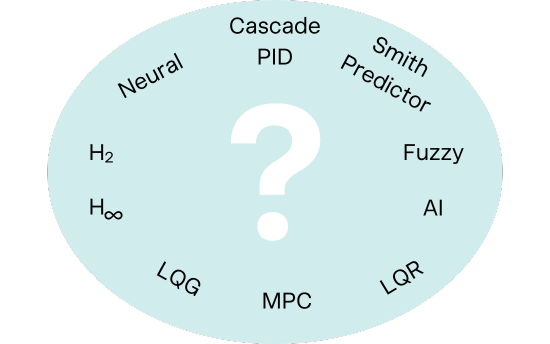
While various control paradigms (such as optimal control, fuzzy logic, and neural-network-based methods) have been proposed as APC solutions, Model Predictive Control (MPC) is by far the most widely adopted technology in the process industry. Modern MPC implementations may incorporate data-driven modeling or machine-learning techniques to support model development and monitoring, while retaining deterministic, constraint-based control at their core.
Learn what APC systems can do for you to accomplish the ultimate optimized plant performance.
#benefits
Benefits of APC for Optimization
Real-Time Optimization
Advanced Process Control (APC) continuously monitors and adjusts process variables in real time to maintain optimal conditions. Using a programmable logic controller or predictive models, it anticipates disturbances before they impact performance and makes proactive corrections. This real-time optimization is achieved through a distributed control system that ensures the process stays on target even as conditions change.
Increased Throughput and Capacity
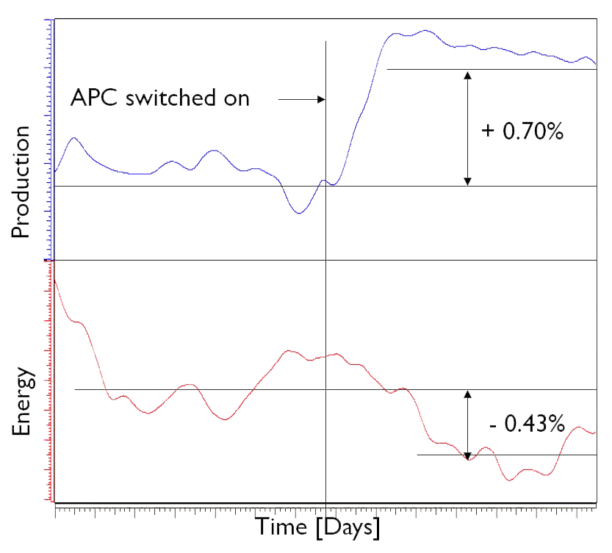
One of the most immediate benefits of APC is the ability to safely push operations closer to maximum capacity. While traditional control strategies often require operators to leave a “safety cushion” to avoid instability or constraint violations, APC reduces process variability and coordinates multiple control loops, allowing plants to increase throughput without increasing risk. The result is higher production rates using the same assets.
Reduced Energy Consumption
Energy costs are a major driver of operating expenses in industrial processes. APC minimizes unnecessary energy use by operating equipment at the most efficient conditions possible. By reducing variability and avoiding overcorrection, APC prevents energy waste while still meeting production and quality targets.
Less Product Variability
Consistent product quality is critical for customer satisfaction and regulatory compliance. APC reduces variability in key quality parameters by maintaining tighter control around target values. This leads to less rework and reduced material waste, improving both efficiency and reliability.
Higher Profitability
Optimization isn’t just about control; it’s about financial performance. By maintaining optimal setpoints, APC directly improves profitability by increasing throughput and lowering energy usage, while maintaining product quality. Small improvements like these across multiple variables can compound into significant margin gains over time, making APC one of the highest ROI investments in process optimization.
#apc-digital
Advanced Control Technology As A Foundation For Digital Transformation
Advanced Process Control is more than a high-performance control solution; it is a foundational element of a plant’s digital architecture. By operating directly in the control layer, APC links operational execution with engineering models and business objectives. Unlike standalone analytics or dashboards, APC closes the loop by translating insights into continuous, automated control actions.
The models and infrastructure developed for APC can be extended to support plant-wide optimization, energy management, and emissions reduction initiatives. In addition, the disciplined approach required to deploy and maintain APC, such as data quality management and operator engagement, helps organizations develop the skills and governance needed for broader digital transformation.
By embedding predictive, model-based decision-making into daily operations, APC enables plants to move from reactive control strategies toward a more proactive, data-driven operating philosophy.
#mpc-software
Model Predictive Control Software
MPC is the most popular APC technology used in the industry. The Model Predictive Control software uses a model of the process to predict the behavior of the plant in the foreseeable future. Typically a couple of minutes to even several hours ahead. Model Predictive Control software is easy to integrate, intuitive, and will help you reach a stable production process.
#mpc-platform
Orise Digital MPC Platform
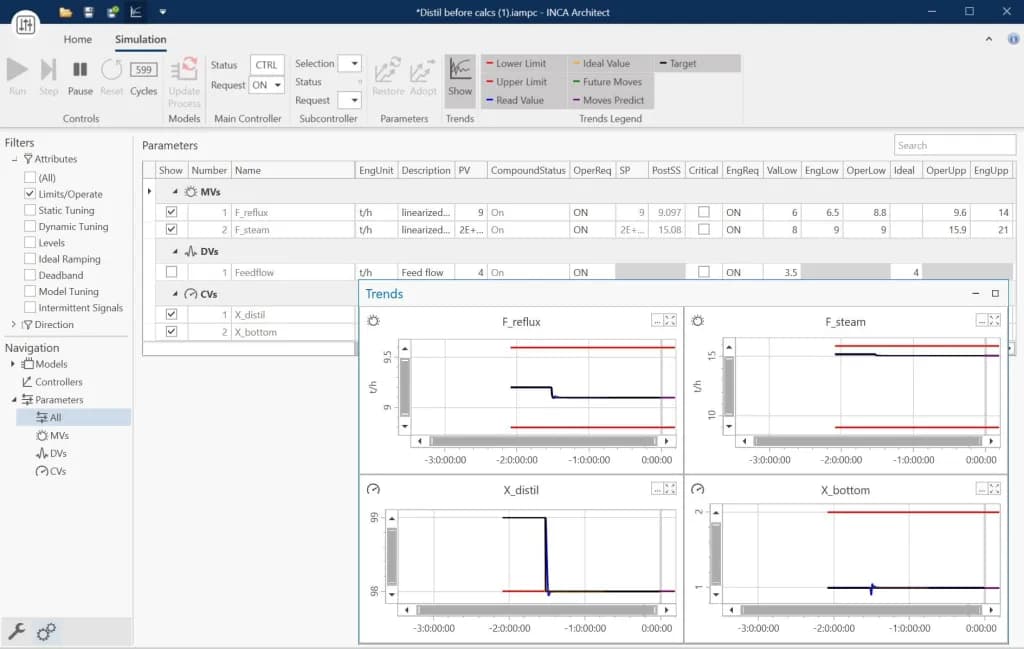
Orise Digital’s MPC platform creates value by continuously optimizing the key process parameters online, in closed loop, keeping the plant in the most economical operating point every minute, 24/7.
To be able to do that, the MPC Platform predicts the behavior of the plant, accounts for plant disturbances and takes all plant constraints into account. This will result in:
- Reduced process oscillations resulting in less wear and tear of the equipment
- Fewer alarms
- Fewer operator interventions
- More efficient plant operations (higher production, less specific energy consumption, better quality control)