

Automation in Life Sciences

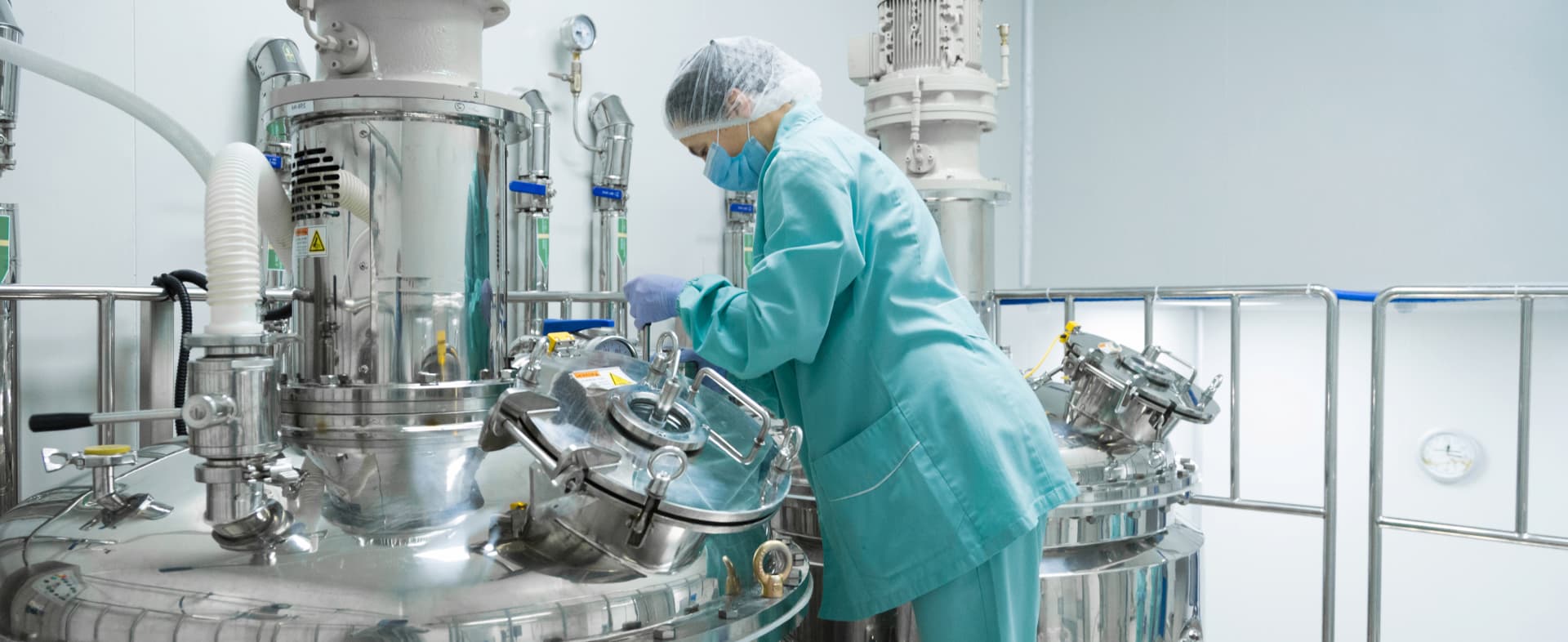
In life sciences manufacturing, the stakes are understandably very high, and exacting standards are a necessity across all aspects. You must deliver results quickly while ensuring accuracy and security.
Patient welfare is the highest priority, but a balance must be maintained between regulatory pressures and market competitiveness, as well as between rigorous documentation and consistent efficiency.
For these reasons, one of the most important developments of Industry 4.0 has been the rise of automation in life sciences.
Automation encompasses systems integration to process instrumentation HMIs and beyond, and is designed to reduce your time-to-market and engineering costs while helping you comply with stringent government regulations.
From Systems Integration to Process Instrumentation HMIs, Orise is here to help. Our integrated solutions are specifically designed to reduce your time-to-market and engineering costs while helping you comply with stringent government regulations.
#challenges
AI-Powered Life Sciences Automation Solves Many Challenges
In life sciences, reproducibility is as important as speed and compliance, both in the laboratory and on the production floor. Even small variations in technique can change results. As such, you need to know the exact process, quantities, and steps that led to that outcome.
This documentation is also necessary for compliance. Any change in action, parameter, or material affects the output. That’s why regulators want every detail to be scrupulously documented, as it may affect product quality or patient safety.
This traceability ensures that methods, instrument settings, calibration records, and sample histories can be accurately reconstructed in clinical trials, new drug development, and production in the pharmaceutical industry.
Traceability is even more important in manufacturing and production. Regulations such as FDA 21 CFR Parts 210/211, EU GMP (Eudralex Volume 4), ICH Q7/10, and other GxP frameworks increasingly require that materials, equipment, personnel interventions, environmental conditions, and batch records be tracked from beginning to end.
If an issue emerges—such as contamination, an out-of-specification result, or a quality deviation—manufacturers must be able to pinpoint the source quickly and prove that all other batches remain safe.
It’s not that you can’t achieve traceability and a comprehensive paper trail with manual processes. However, they require time and remain susceptible to human error.
Automation, on the other hand, is inherently consistent and supports continuous monitoring. It is typically enabled through systems such as Manufacturing Execution Systems (MES), Electronic Batch Records (EBR), and Laboratory Information Management Systems (LIMS). These make workflows and processes consistent, and capture data in real time, giving you the transparency and audit-readiness regulators and quality teams demand.
Combined with artificial intelligence (AI), automation makes projects smarter, safer and more cost-effective. Using AI tools helps automatically adjust process simulations, deploy audit tools to compare configurations to design data in real time, and virtually commission to reduce time at the site.
Smart automation also leads to operational excellence. It gives you faster development cycles with more reliable outcomes. As a result, you can become more resilient.
#benefits
Automation Benefits in Biotechnology, Pharmaceuticals and Drug Discovery
Streamlined Compliance and Audit Readiness
People, even if they are following step-by-step instructions, don’t always complete a task in exactly the same way. One might take a shortcut, while another might be extra careful.
This can go unnoticed if the results match your expectations. However, if something goes wrong, it becomes difficult to identify the exact deviation that caused the issue.
Automation often helps to standardize workflows in order to eliminate any undocumented steps. Each action is logged precisely, complete with timestamps and metadata. This makes audits smoother because teams can retrieve accurate, validated records without digging through manual files.
Improved Traceability and Data Integrity
Manual data capture usually happens after the task has been completed. This means that if the person responsible doesn’t remember every detail perfectly, they may make mistakes and omit steps.
Automated systems capture data in real time, as work happens, without human intervention. This reduces transcription errors and eliminates gaps in documentation. It also preserves data in a controlled system. If something goes wrong, and investigators need to understand exactly what happened and when, they have all the information they need.
Higher, More Consistent Quality
As we mentioned earlier, people may not always be consistent. They might not just work differently from each other; even their own processes can vary from day to day.
Laboratory automation, which can often be enhanced by AI, controls key parameters such as timing, temperature, and dosing with a level of precision that is difficult to achieve manually. It improves quality by reducing variation in the production process, resulting in more consistent outcomes. It also lowers the chance of deviations and batch failures.
Greater Reproducibility
Recreating a problem when workflows are executed manually can be challenging. Operators may not carry out the process in the exact same way, and even tiny variations could lead to drastically different results.
Automation removes operator-to-operator variation and supports standardized methods. This helps teams generate results they can trust and repeat. It also makes multi-site research and technology transfer more reliable.
Reduced Human Error and Lower Operational Risk
Humans are not perfect; they can be some of the time, but not always. That’s why manual work carries a risk of errors, such as incorrect material additions or setpoints, missed process steps, or incomplete batch documentation.
Smart automation reduces these risks. Once you’ve defined how steps are to be completed, it doesn’t allow unauthorized changes to either the methods or the parameters. Each step follows the prescribed process and is documented exactly as is, to eliminate errors and inefficiencies.
Improved Efficiency and Performance
Repetitive manual tasks pull engineers and operators away from higher-value work. Automation allows teams to move faster with fewer bottlenecks and shorter turnaround times by taking care of these for them. When combined with artificial intelligence, it also helps optimize the use of your equipment and facilities, supporting better operational performance.
Higher Throughput and Faster Development Cycles
Manual operations rely on the people who run them. This means they are limited by the individuals’ working capacity. Also, scaling up requires more personnel.
Automated systems, on the other hand, don’t need breaks and can handle larger volumes of work. You process more data in less time and advance batches with fewer delays. As a result, automation and AI can help you move through development cycles more quickly.
Increased Safety for Staff
The pharma and biotech industries handle chemicals that can be toxic, corrosive, or otherwise dangerous.
Production automation improves worker safety by reducing the need for staff to handle hazardous materials or work inside challenging environments. Systems like MES and EBR walk operators through the approved procedures, ensuring that each step is completed safely, in the correct sequence.
Process controls that reduce ad hoc manual actions result in fewer risks. As a result, automation can lower the risk of chemical exposure, contamination, and ergonomic injuries. It also supports safer handling in sterile or high-containment settings.
More Stable Inventory and Supply Chain Processes
By automating inventory tracking, you give your teams an accurate view of consumables and materials. Real-time visibility into available inventory and materials that need replenishment makes operations more predictable and reliable.
#types
Types of Automation in Life Sciences Production The following categories represent the most common types of automation used by modern life sciences companies:
Production

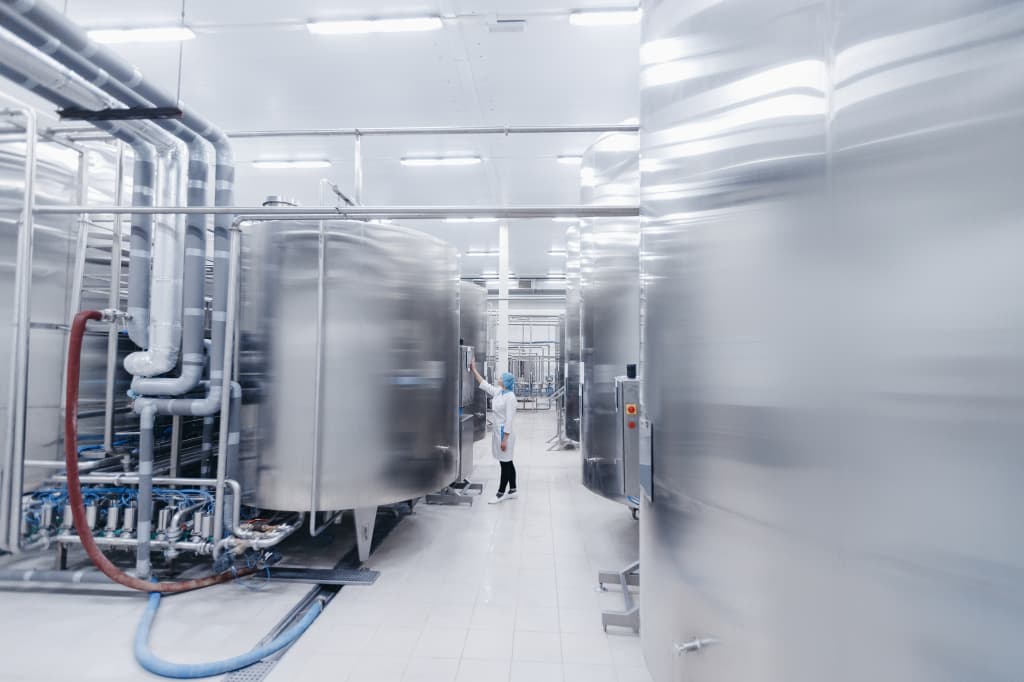
In biotechnology and pharmaceutical production, automated formulation, filling, and packaging lines help you reduce contamination and support aseptic operations.
In these factories of the future, MES and electronic batch records prevent deviations and guide operators through approved steps.
Integrated control systems such as DCS and SCADA platforms help you coordinate equipment, monitor conditions, and record process data automatically.
Automated data capture and unified batch records make it easier to confirm that every stage met predefined requirements and remained within approved ranges.
Modern automation systems also allow integration with production equipment, control systems, and business platforms. The Industrial Internet of Things (IIoT) gives your teams real-time visibility across the production line, from shop-floor controls to higher-level planning systems. However, simply recording data in real time is not enough for operational efficiency.
Smart automation helps you make the most out of this digitalization. It takes all the information being recorded and turns it into action. For example, if the temperature goes beyond the acceptable limit, automated systems won’t just warn you. They can pause the process instantly.
Similarly, equipment data being fed into MES is validated before being updated in the EBR. Here, the information is checked for compliance before the next action is allowed. The entire process is reviewed automatically by quality systems.
Workflow and Documentation
Automation helps you manage documentation with more consistency and less manual effort. It helps you keep SOPs, work instructions, and training materials accurate and up to date.
Electronic signatures and access controls help you establish accountability and create clear, traceable records that support audits and inspections while staying within compliance standards.
With workflow automation, tasks follow defined approval paths, making change control, corrective and preventive action (CAPA), and deviation management easy.
Supply Chain and Material Handling
Reliable production depends on timely access to materials. At the same time, too much stock can mean increased storage costs and the risk of items expiring before you can use them.
Automated inventory systems help you monitor raw materials and components in real time, with barcodes and RFID tags enabling tracking across storage, movement, and use. They notify you as soon as stock levels are low or items are approaching their expiration dates. This allows you to manage your inventory more efficiently.
These systems make workflows more predictable and reduce the operational risks that come with supply interruptions. They also strengthen traceability by linking material history to batch records and production events.
Facility and Equipment
Automation solutions help you maintain consistent, compliant environments during production. Building and cleanroom control systems can regulate factors such as temperature, pressure, and airflow without manual intervention, and environmental sensors constantly monitor conditions, notifying staff of unacceptable deviations.
Automated scheduling tools coordinate equipment use and maintenance to keep everything working properly. This reduces downtime and protects product quality by keeping facilities within the required parameters.
#foundation
Building a Strong Foundation for Automated, Compliant Operations in Life Sciences
Automation gives life sciences plants greater control over processes, improved traceability, and a more consistent workflow. It helps you move faster without lowering standards of quality or compliance.
But manufacturing plant automation is only as strong as the systems that support it. Your next step might be to ensure your quality management framework can keep pace with increasingly integrated, data-driven operations.
As the role of automation grows in production, quality processes must become more structured. Teams need clear ways for managing change, documenting deviations, handling investigations, and keeping procedures up to compliance date.
A modern Quality Management System (QMS) provides that structure. It’s a formalized system that defines and documents an organization’s processes, procedures, and responsibilities for achieving quality policies, practices, and objectives. It helps you coordinate and direct your activities to meet customer and regulatory requirements, and to continuously improve effectiveness and efficiency.
It creates a foundation where automated processes, controlled documentation, and compliant decision-making work together. The right QMS can help you scale your automation initiatives with confidence and improve reliability across the entire production process.
Learn more about the role of digital QMS platforms in life sciences and how Orise can help.