

Industrial IoT Solutions for Manufacturing

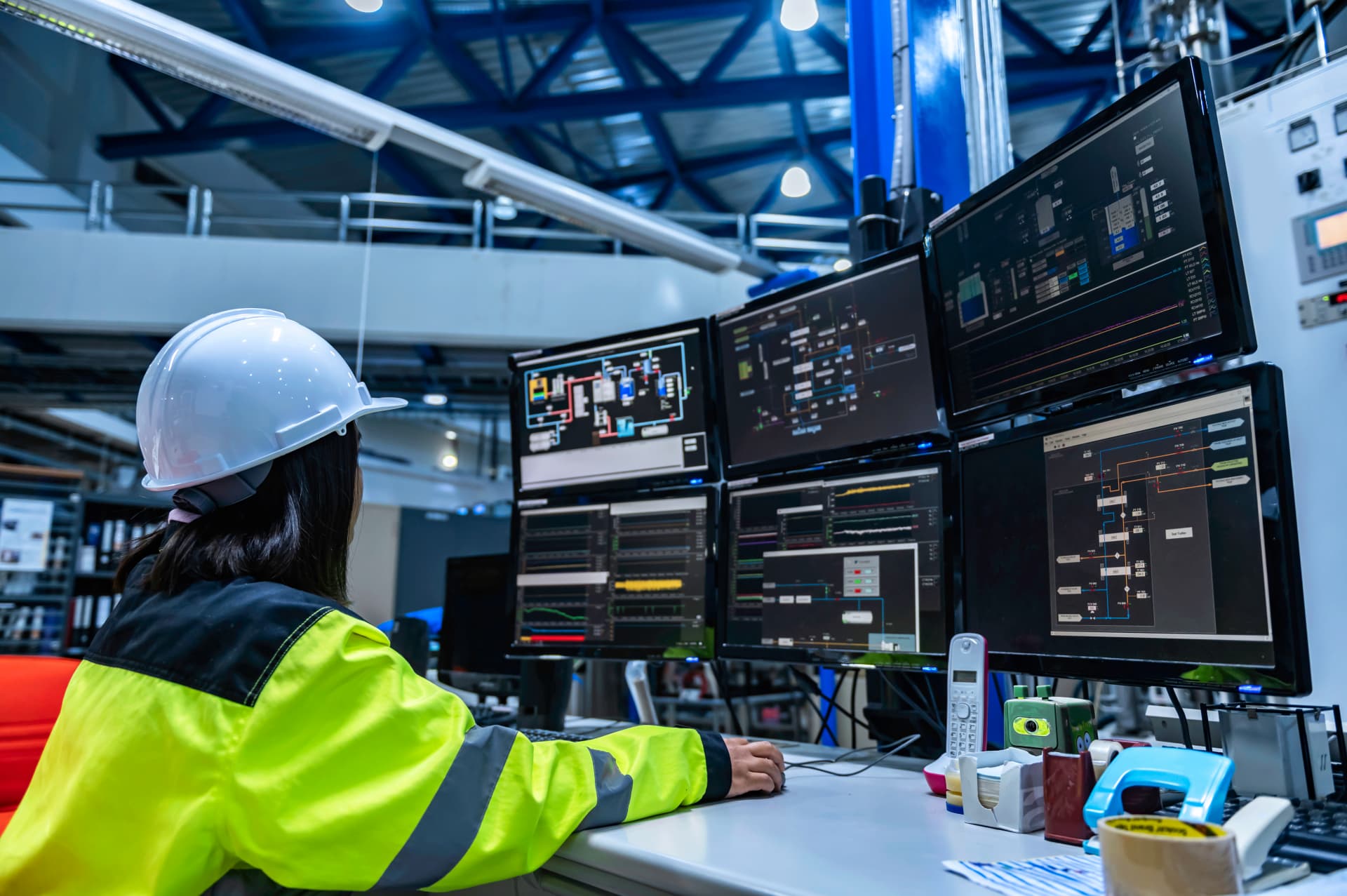
IoT solutions for manufacturing (IoTfM) are transforming modern production processes by connecting machines and using sensors and software to collect and share data as part of broader manufacturing digitalization initiatives. By providing greater visibility into daily operations, these solutions help businesses optimize workflows, reduce downtime, and improve overall efficiency.
You may be familiar with, or even use, IoT devices or “smart objects” in your home, whether that be smart thermostats, doorbells, lighting, or wearable devices like smartwatches or RFID-enabled clothing. Well, alongside these examples, IoT can be present in larger-scale examples such as industrial machinery and production processes.
In smart industrial environments, Industrial IoT solutions in manufacturing utilize smart sensors, AI, and connected networks to effectively optimize production processes and enhance overall efficiency. At Orise, we show you how to navigate the expansive new technology space that encompasses industrial IoT devices and manufacturing IIoT platforms.
#what
What is IoT in Manufacturing?
Within this industry, IoT has been highly significant, impacting operations at every single level of the market. The connection of machines, devices, and systems helps manufacturers to capture real-time insights, boosting productivity and improving processes.
The key components of an IoT system in this context include:
- Sensors – Collect real-time data on various parts of the production line, including temperature, vibration, and pressure. They can substantially reduce unexpected failures and ensure that energy is being used efficiently.
- Edges – Refers to edge computing, in which data is processed directly on the factory floor rather than in the cloud. This is highly beneficial for improving decision-making as a result of the real-time analytics being collected within manufacturing IIoT systems.
- Devices – The devices used in manufacturing IoT solutions include smart sensors, connected machinery, Programmable Logic Controllers (PLCs), and edge gateways. They optimize production processes by collecting data in real time, thus enabling better quality control and asset tracking.
- Gateways – Throughout the production process, IoT gateways are the vital bridges between operational technology and IT systems (like the cloud). They enable protocol translation, data filtering, and enhanced security. One of their most important functions is also turning the raw machinery data into actionable insights.
- Software – IoT software, such as industrial IoT solutions, predictive maintenance, and cloud computing tools are critical for real-time data collection and analytics. They allow automation to be carried out seamlessly, reducing downtime and improving quality control within processes.
How Does IoT Differ from Traditional Automation?
Before the rise of IoT, most industries relied solely on traditional automation systems such as assembly line robotics, CNC machines, and PLCs. These use pre-programmed machines and control systems for the sake of precisely repeating tasks.
While a great option for carrying out tasks quickly and uniformly, traditional automation does not offer the same intelligence as modern industrial Internet of Things technologies. This is because traditional approaches work in closed environments, limiting connectivity and meaning that each machine operates independently, which is a challenge in the era of Industry 4.0.
IoT systems for manufacturing do not just execute commands; they go further in collecting, sharing, and analyzing data instantly. The sensors, devices, and software used allow for monitored performance and smart decisions that go beyond the capabilities of traditional automation systems.
#benefit
Benefits of IoT in Manufacturing
- Increased Efficiency
When you use IoT devices to automate your processes, you will see a significant increase in productivity levels. Fewer resources will be required for daily operations, and you will notice a significant reduction in downtime. Moreover, having machines with predictive maintenance means that quick fixes can be made and costly breakdowns are avoided.
- Enhanced Quality Control
With the use of real-time sensor data, these solutions can improve quality control throughout every stage. The key impacts on quality involve active detection of any anomalies and better control over processes. Having the ability to react quickly to problems will allow you to reduce the necessity of product recalls. If quality is a top priority within your operations, then IoT solutions are undoubtedly worth implementing.
- Prevention of Downtime
It is no secret that machine downtimes directly impact the productivity of any manufacturing company. Unplanned downtimes can come with high costs, which is why preventing them is critical. Industrial IoT applications use sensors that carefully monitor equipment to stop malfunctions from happening and keep daily operations running smoothly.
- Scalability
Due to the way automated systems work, they are inherently adaptable and can be rescaled depending on manufacturing requirements. Within this industry, new demands and alterations are a part of the process, so having methods in place that can handle minor interruptions is incredibly useful. Whether this means increasing the volume of production or integrating new equipment, Industrial IoT systems will be able to respond appropriately and meet your business requirements.
- Improved Compliance
Because IoT devices are continuously collecting data, you will always have clear and time-accurate reports of processes. This makes inspection and audit processes more straightforward, as you will have immediate access to the required information. Additionally, having real-time monitoring in place leads to far more effective hazard prevention in the workplace.
- Reduced Operational Costs and Waste
The reduction of manual processes results in lowered costs and higher profitability for your business. IoT devices can be used to monitor the energy being used throughout industrial processes to ensure that consumption is optimized and costs are minimized wherever possible.
- Better Customer Experience
One of the main advantages of Industrial IoT in manufacturing is the benefit to the customer through the significant improvement in product quality. Since any issues can be detected and prevented in production, the final results are more consistent. Additionally, there is often a faster delivery time for the customer as a result of optimized production processes enabled by IoT technologies.

#real
Real-World Use Cases of IoT in Manufacturing
When taking a closer look at real-world examples where IoT is being used in manufacturing, the most prominent include:
- Predictive Maintenance (PdM)
By monitoring various machine parameters like vibration, temperature, and energy consumption, sensors are able to predict potential failures before they occur and cause further issues. The result is a drastic reduction in unplanned downtime and lower maintenance costs.
For example, in pharmaceutical manufacturing environments, IoT monitors actively track the performance of critical production equipment and environmental conditions, such as temperature and humidity. This enables teams to schedule maintenance before failures occur while ensuring product quality and regulatory compliance.
Additionally, according to research published by ScienceDirect, IoT systems are playing a huge part in the transformation of traditional factories in Industry 4.0. Using a complex and interconnected network, the production process within factories can be successfully optimized. In this specific example, predictive maintenance is used to prevent machine failures and extend the lifespan of equipment.
- Improvements to Workforce Efficiency
The streamlined operations and automated tasks that IoT systems make possible lead to increased efficiency. Having real-time data allows you to assess different points in the production line and make better decisions.
- Supply Chain and Asset Tracking
IoT trackers will monitor products when they are in transit, checking their location, temperature, and humidity, thus enhancing quality control. This is especially important for cold chain compliance requirements.
Food processing is a good example of an IoT use case in which enhanced traceability is extremely important. RFID and sensors help manufacturers to monitor a product’s journey through each stage of the supply chain.
- Worker Safety Enhancements
Within many modern manufacturing operations, workers utilize smart wearables such as helmets and wrist bands, which actively monitor their safety and track any hazards that might arise. For example, if there is a gas leak in the workplace, these smart devices can automatically contact emergency responders. NSC also reports on the ability of wearables to track health indicators like heart rate, heat stress, or physical strain, which can end up saving people’s lives.
- Remote Monitoring and Diagnostics
Being able to keep a close eye on the status of devices through remote monitoring enables quality control from any location. Issues can be efficiently resolved as soon as they arise, and security will be enhanced as you receive proactive alerts about your operations.
Implementing and Integrating IoT Solutions
1. Assess Current Infrastructure and Identify Gaps
You need to understand what your specific goals are, depending on your existing manufacturing processes. Take the time to define what you want to achieve, whether this is reducing your energy consumption, automating your logistics processes, or monitoring asset health. Once you decide on some tangible outcomes, you’re in a strong position to implement the most suitable IoT solutions.
2. Implement Appropriate IoT Devices
The next step will be deploying sensors and IoT gateways to begin the process of collecting data from your machinery. It’s also important to focus on connectivity and network, choosing a strong infrastructure to connect your devices. You do not necessarily need to replace your existing functional equipment. Instead, sensors can be used to integrate older machinery into modern industrial IoT systems.
If you have questions about effective integration, do not hesitate to contact us.
3. Data Analysis and Security
A key part of the process is establishing either a cloud or on-premise data management platform in which information can be stored and processed safely. At this stage, it is also essential to look closely at security and compliance regulations. You can protect your data by implementing end-to-end encryption and planning regular audits to identify and prevent threats.
4. Initial Project Implementation
It is always a good idea to start by implementing your new solution on a single production line or machine to keep risk levels low and gain a better understanding of how it will work. Throughout this test, you can analyze the data and make any necessary adjustments based on performance.
5. Integration and Scaling
After thorough testing, the IoT platform can be connected with existing ERP or MES production control systems to start automating workflows, and the new process can be rolled out across the entire manufacturing process. At this point, it’s also time to train employees on the new digital tools and help them understand how to make decisions based on the data that is provided throughout daily operations.
6. Continuous Optimization
The real-time analytics that are provided by IoT solutions enable you to identify patterns and make ongoing improvements. You should make use of the data to keep optimizing processes and identifying challenges along the way so that they can be resolved.
#challenge
As with any technological advancements, there will always be a few initial teething issues or concerns that are faced along the way. Fortunately, there are solid solutions in place to address these challenges.



Data Security Concerns
Solution: Implementing end-to-end encryption and carrying out regular firmware updates can solve security concerns. It is also a good idea to make use of secure authentication and use threat-detection driven by AI to secure the network edge.

Interoperability Issues
Solution: Adopting IoT technologies with standardized communication protocols, such as MQTT or CoAP, will bridge the gap between incompatible systems. It can also be beneficial to consider the use of middleware or IoT gateways if this particular issue arises.

Technical Difficulties
Solution: Make use of edge computing, which will process data closer to the source. This reduces overall bandwidth usage and greatly improves the expected response times.
Justifying the ROI
Solution: Infrastructure costs can be carefully managed by taking the time to prototype thoroughly and use scalable cloud solutions. This will prevent unexpected expenses from cropping up and make it easier to stick closely to anticipated costs.
#future
Future Trends in IoT for Manufacturing
Here we will take a closer look at the way in which modern technology trends will continue to interact with IoT systems in future industrial processes:
- The Expanding Use of Edge Computing – Edge computing is used in manufacturing to enable local data processing rather than in the cloud, reducing latency and improving real-time decision-making.
- Integrating AI and IoT – The use of machine learning algorithms and manufacturing AI solutions can carefully analyze the data collected by sensors to predict failures in equipment. This reduces machine downtime and cuts maintenance costs.
- 5G-Enabled Connectivity – 5G networks can provide the required bandwidth for extensive IoT deployment. Its capabilities enable seamless communication between all components of the network, an essential element for successful IoT applications. PwC reports on the improvements in reliability in IoT that are made possible by 5G.
- Sustainable IoT – Because IoT sensors actively monitor energy consumption and emissions, factories can reduce their carbon footprint and stick to environmental regulations.
- Digital Twins – Manufacturers can simulate processes and optimize performance levels due to virtual replicas of their physical assets.
Ensuring Data Security in IoT Systems
While IoT devices are undoubtedly beneficial, they unfortunately come with potential entry points for cyberattacks. As the number of IoT devices being used in industrial operations increases, so does your attack surface. Luckily, there are several precautions you can take to ensure that you are gaining the many benefits of IoT solutions while simultaneously staying protected from the risk of attack.
One of the most effective ways to keep your system safe is through prioritizing strong authentication and access control. Every single device should have its own strong password, and should only be accessible to authorized persons. Multi-factor authentication (MFA) and Role-Based Access Control (RBAC) are good ways to limit user access and safeguard sensitive data.
When data is being transmitted between various devices, gateways, and the cloud, data encryption should be in place using protocols such as TLS to protect IoT applications. When data is stored, algorithms like AES can be used.
You can drastically reduce the risk of data breaches in your systems by implementing these various controls, ensuring the reliability of your IoT system.
Data Platform for Industrial IoT
At Orise, our Industrial IoT solutions are powered by a scalable Data Management Platform that unifies manufacturing data across multiple plants, factories, and global operations. Rather than working with fragmented systems or isolated dashboards, our platform consolidates all operational data into a uniform data model, ensuring consistency, accuracy, and comparability across sites.
This approach enables manufacturers to move beyond siloed reporting and instead gain a truly connected view of their entire production network. Through intuitive global dashboards, stakeholders can monitor performance, efficiency, energy usage, and asset health in real time.
We offer tailor-made platform deployments designed to fit your precise use cases and integrate seamlessly with existing infrastructure, enabling implementation without disrupting ongoing operations or requiring major system replacements.
By standardizing data across systems and locations, Orise’s platform enables faster decision-making, improved operational visibility, and more effective long-term optimization strategies across the entire manufacturing ecosystem.